The whole restaurant. Talk to us
Two ends of a week are written down. The week is not.
Your invoices say what arrived. Your register says what sold.
The hours between decide your margin, and nobody writes them down.
Three moments in a day. Two get recorded.
-
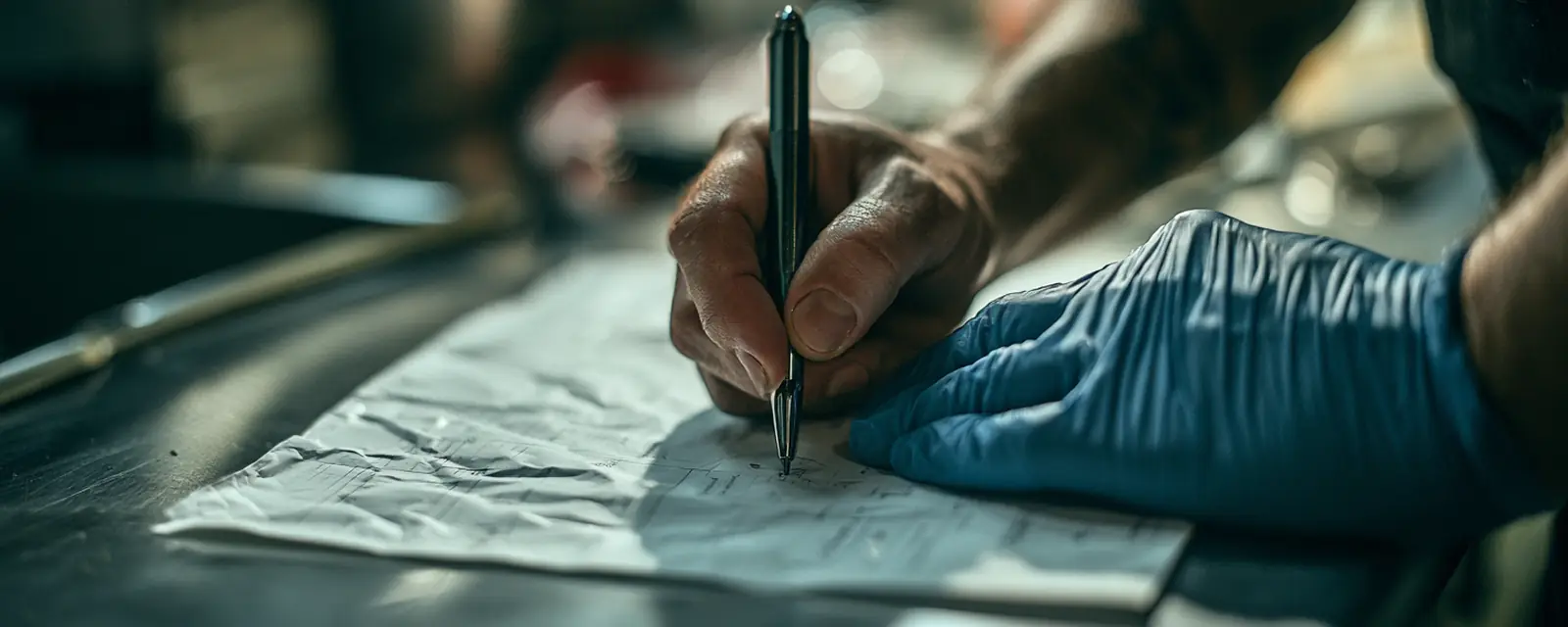 Morning
A truck arrives and somebody signs for it
Short cases and substitutions go into the same signature.
-
 The rest of the day
The food becomes work
Trimmed, thawed, prepped, comped, thrown out. None of your systems can tell expected waste from food that went missing.
-
 Close
Close
The register says what it says
The difference is called variance. One number for a hundred causes.
A report reads what was recorded. The middle was not.
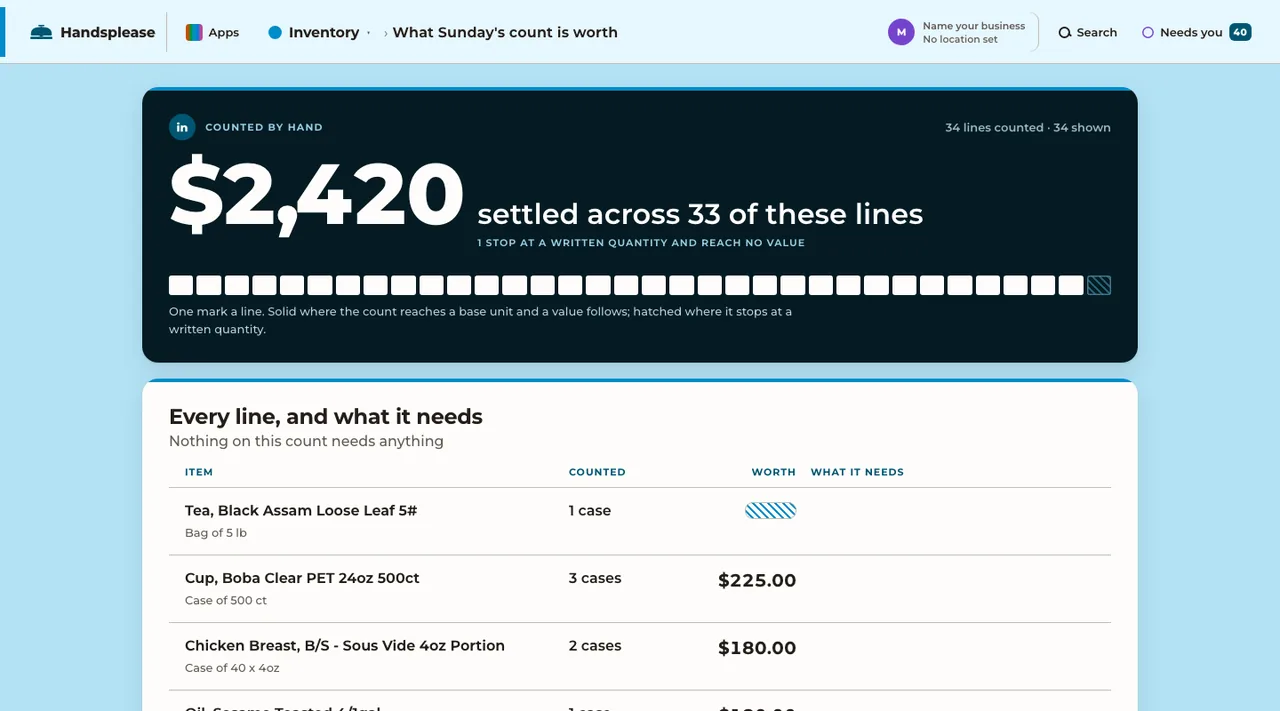
Every screen on this page is the product itself.
Now ask that shelf what went missing since the last count. Nobody can say. What came in, got used or got thrown out was never written down. A loss with nothing logged against it is not theft and not a miscount.

4, at least. A delivery app does not report an order that never reached the kitchen. So four may be more, and the page says so.
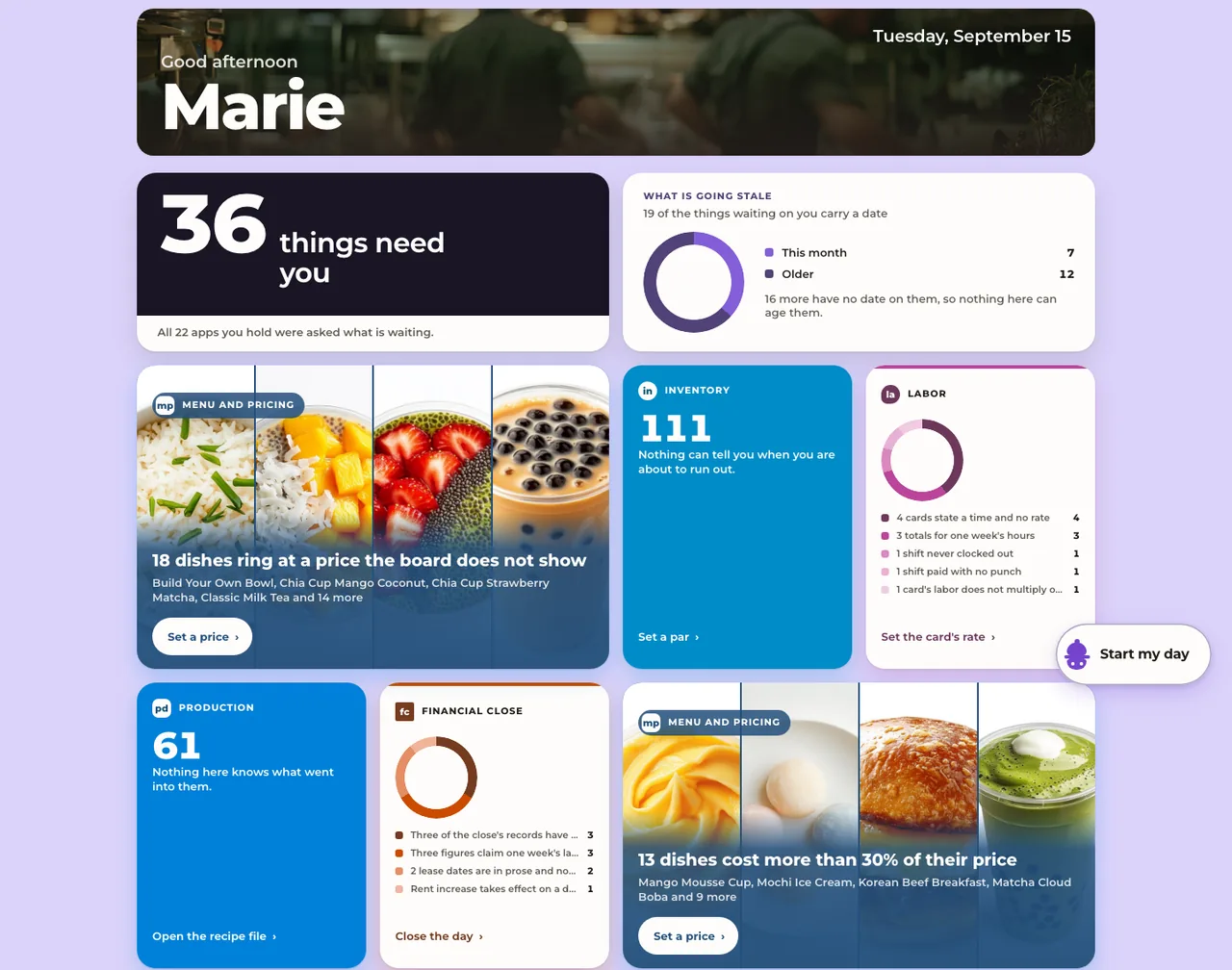
The same gap, with real goods. Cream cheese at twelve by three-pound tubs. Whole milk at four by one gallon. Jasmine rice in a fifty-pound bag. The recipe cards and the order guide share nothing but a typed name, so no card reaches a price until a person pairs them.
What three operators' paperwork showed
The money is not on the invoice. It is between the documents.
-
Nine real invoices, one operator
Almost nothing to recover
5 of 348 lines carry a delivery discrepancy. 2 of 348 fail their own arithmetic. This cuts against us, so it goes first.
-
One month of payables
$7,487 moved between two versions of one export
28.8 percent of one month's payables. $4,700 of it was already out the door, twenty-five days before anybody noticed. The operator caught it by hand, twenty-five days late.
-
Fourteen findings across three operators
Eleven of them are not savings
Figures you run the business on that cannot be trusted.
Every one of the fourteen needs more than one document.
What closing the gap takes
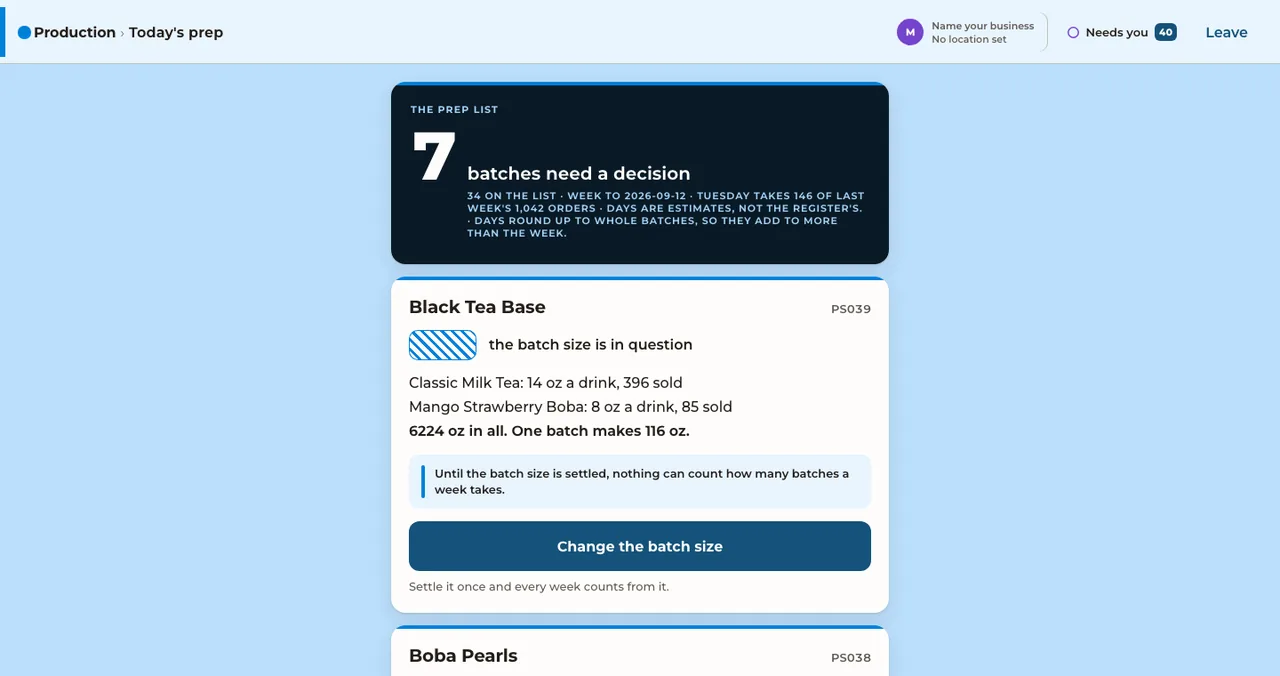
A page where each job happens, small enough to use standing up.
The dock is purchasing's. The walk-in is inventory's. The pass is the kitchen's.
Separate apps, separate buyers, one record they all write to.
For investors: how the category is built
What each system is built around, and where it stops.
How the category is built →The middle of your week is the only part nobody sells you software for.
It happens at the dock, in the walk-in and at the pass, not at a desk.