The whole restaurant. Talk to us
Twenty-one applications on one record. Start with the six that tell you what things cost.
Each has its own users and its own daily job. Your buyer opens procurement. Your GM opens labor.
Where to start
Three steps, in order. Options for the rest.
Step one. What it cost you.
Procurement, Inventory, Supplier Contract, Production, Menu and Pricing, Accounts Payable.
What you paid, what showed up, what a plate costs. Start here. It stands on its own, with no scheduling and no point of sale behind it.
Step two. Who worked, and what it cost.
Labor, HR, Demand Forecast.
Who is on, what the hours cost, what you owe.
Step three. The money coming in.
Transaction and POS, Kitchen and Service Ops, First-Party Ordering, Guest and CRM, Channel Economics, Financial Close.
Ring the sale, run the pass, know the guest, close the period.
Options, not steps.
Bar and Beverage, Retail, Catering and Events. Take them or leave them.
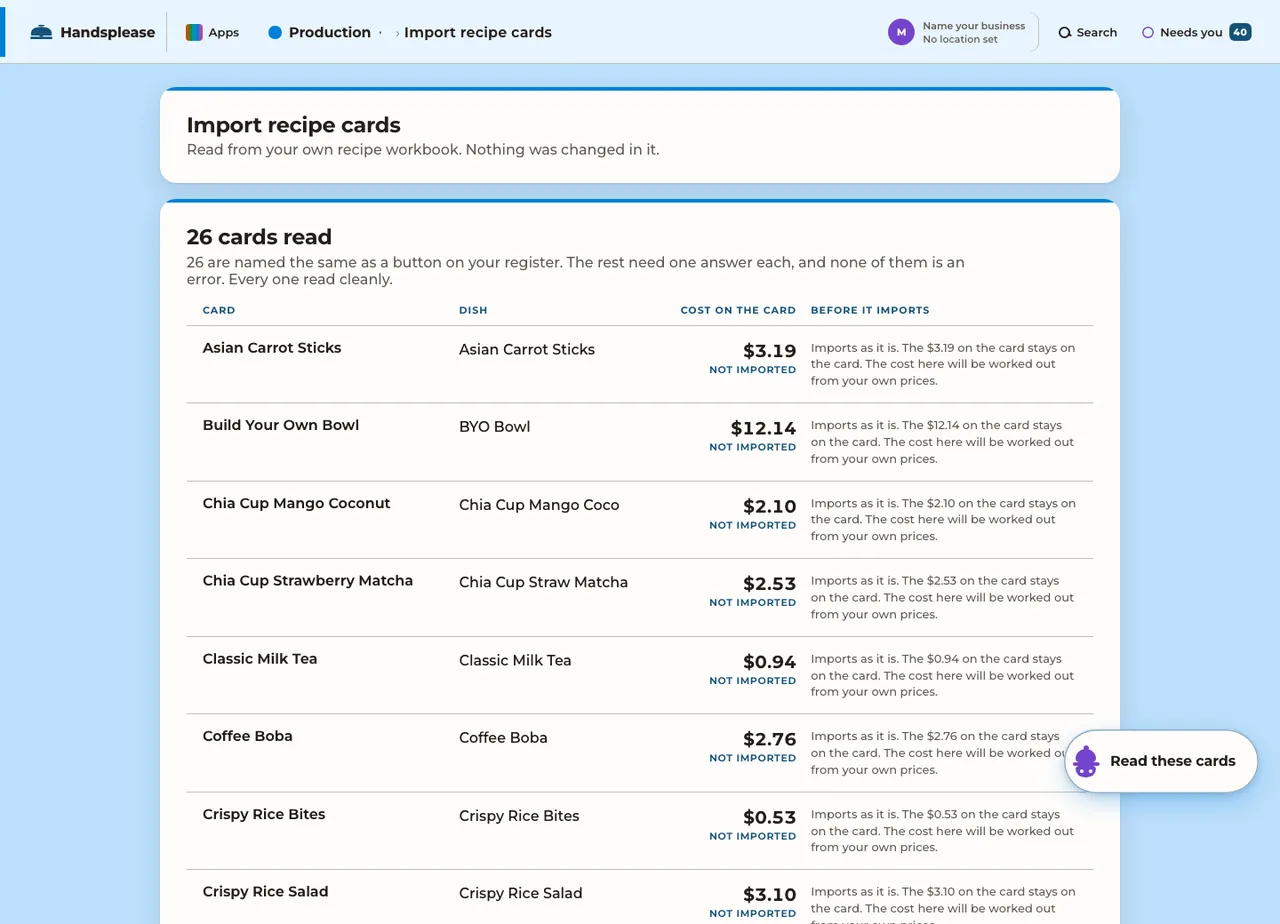
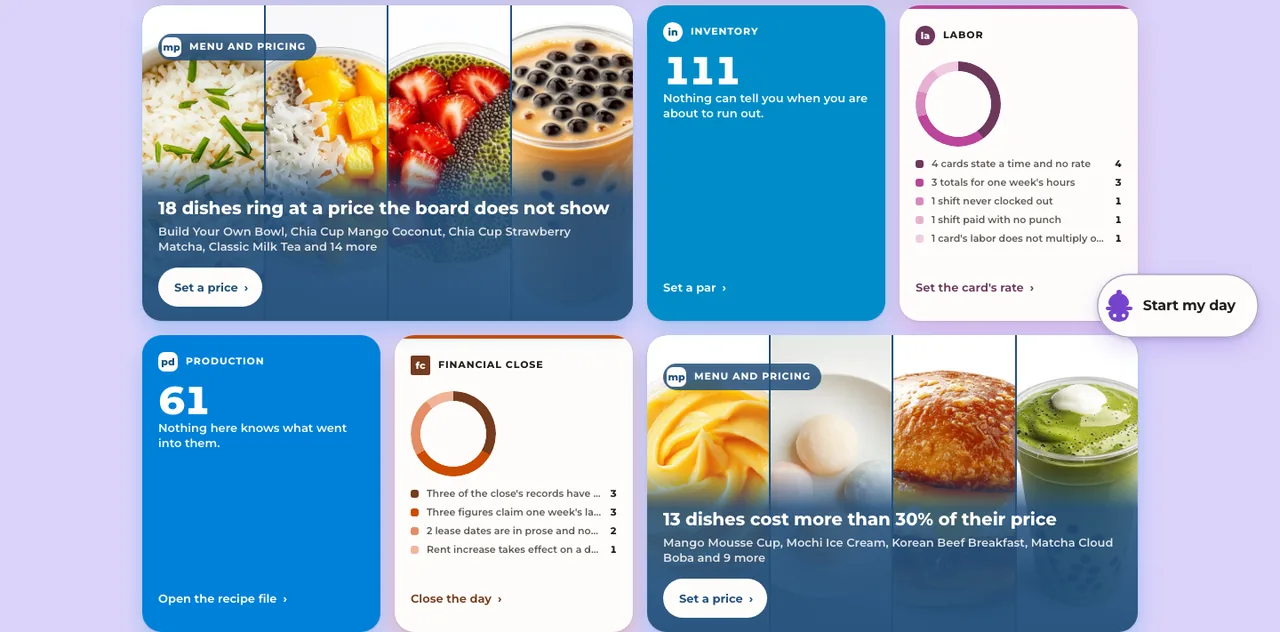
Organized by when you do the work
Where to start is the order you buy in. This is when each one is used.
-
 Transaction · while you are open
You meet the guest, the supplier, the channel and the team
-
 Ideation · before you open
The menu, the price, the schedule, the forecast, the contract
-
 Impact · what it did to your week
The close, the true margin, the compliance record, the people
What happens while you are open
Ten applications.
- Transaction and POS Gross sales. Moves revenue
- Guest and CRM Whether the guest comes back. Moves revenue
- Kitchen and Service Ops Covers per labor hour. Moves labor
- First-Party Ordering Orders without the commission. Moves revenue
- Procurement What you agreed to pay. Moves COGS
- Accounts Payable What you paid, matched to what arrived. Moves COGS
- Bar and Beverage Pour cost. Moves revenue
- Retail Non-food sales. Moves revenue
- Production Yield. Moves COGS
- Inventory Used against bought. Moves COGS
What you decide before you open
Six applications.
- Menu and Pricing The price and its margin. Moves revenue
- Demand Forecast How busy you will be, for prep, buying and staffing. Moves COGS
- Labor Scheduled hours. Moves labor
- Supplier Contract Contract price against invoice. Moves COGS
- Catering and Events Guaranteed against cooked. Moves revenue
- Lifecycle Whether the unit should exist. Moves opex
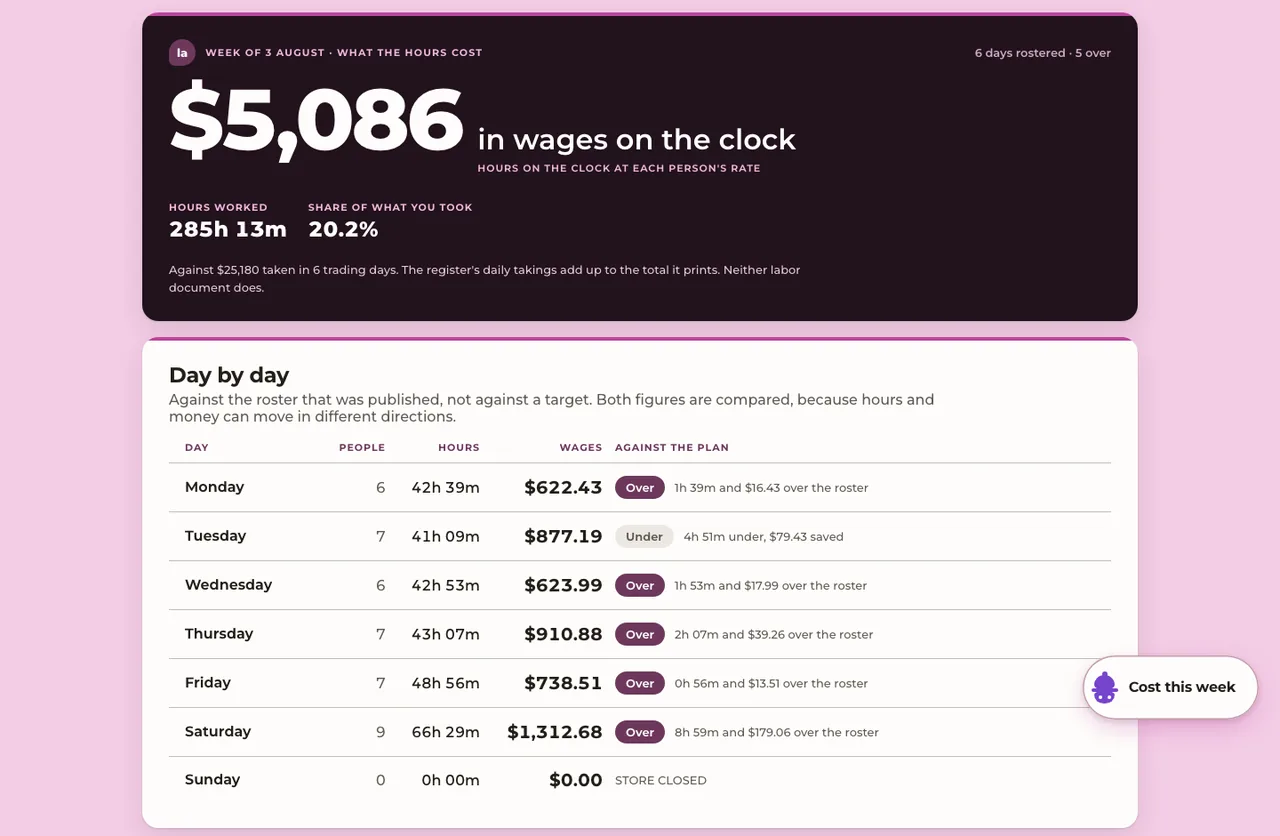
What it did to your week
Five applications.
- Financial Close The statement itself. Moves opex
- Channel Economics Margin after the platform's cut. Moves revenue
- Compliance and Reporting Fines and closures. Moves opex
- HR Wages, turnover, certifications. Moves labor
- Equipment Repairs and downtime. Moves opex
And one underneath them all
- Identity and Access Accounts, users, teams, locations. Under every app
Why this is not twenty-one tools
One record
Your guests, your items, your business, and everything that happened. One copy, and it is yours.
One way in
One sign-in. Open an account yourself, no salesperson.

Five things in the bar
- AppsEverything you hold.
- Needs youWhat is waiting on you.
- SearchEvery app at once.
- FernandHelp on the page you are on.
- MessagesNext to the work.
You get all twenty-one.
Start with one step. Every step writes to the same record.